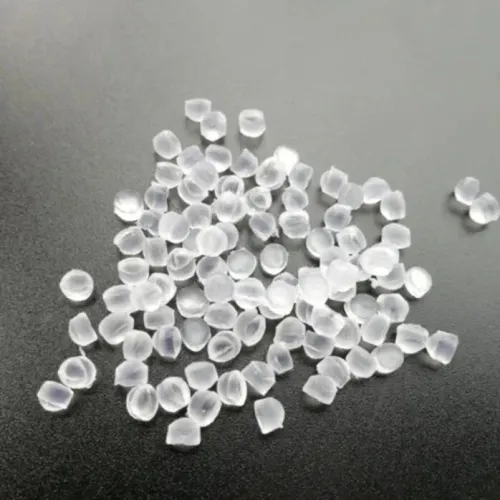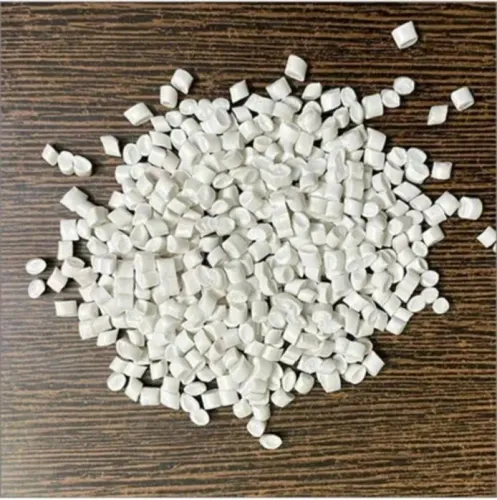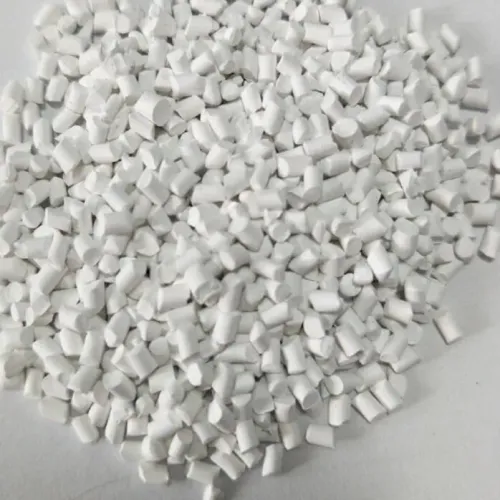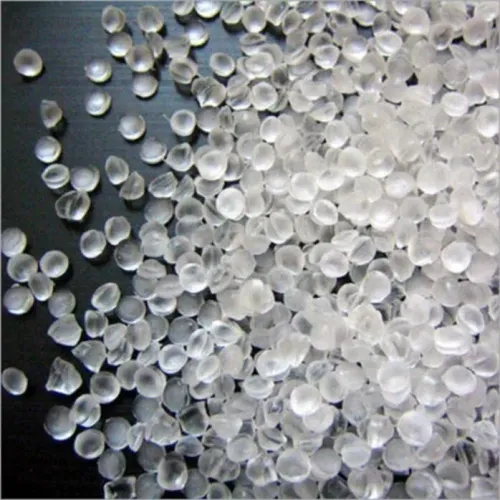
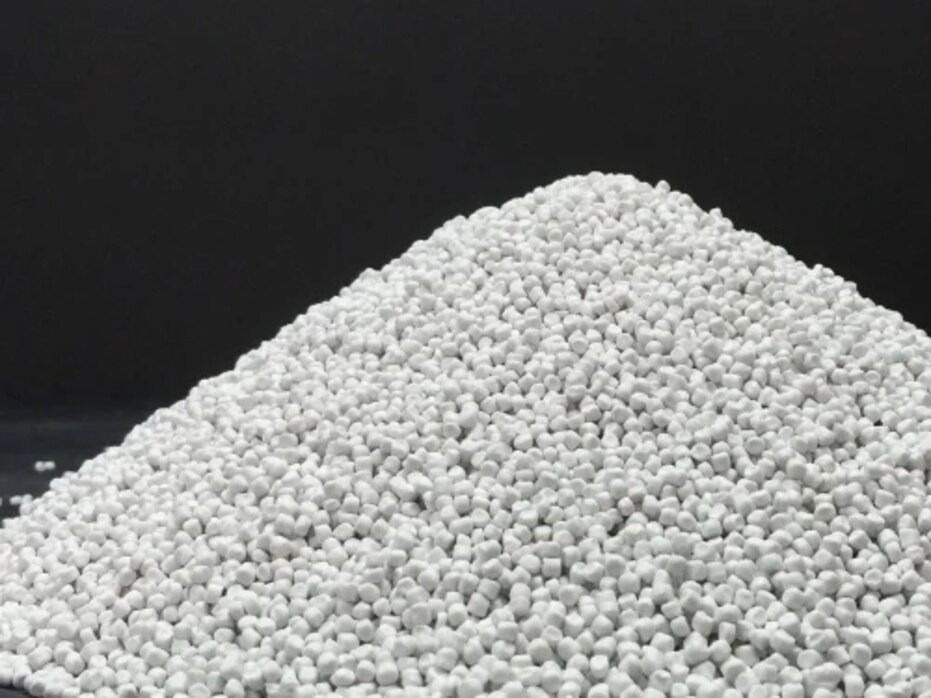
A calcium filler masterbatch can simplify mineral dosing, but efficiency depends on the carrier, calcium carbonate loading, feeder calibration, dispersion and the performance you must retain. By the end, you will be able to calculate the real filler addition, set up a controlled trial, compare pelletized masterbatch with loose powder and decide whether the formulation suits your product.
Key takeaways
- Treat masterbatch pellets as a polymer-based delivery system, not pure calcium carbonate.
- Set dosage from the target calcium carbonate percentage and carrier compatibility.
- Compare pellet handling and dispersion against powder before changing your production line.
- Approve suppliers only after trial batches pass loading, quality, and process checks.
What the Masterbatch Adds to Your Formulation
A calcium filler masterbatch is a concentrated pellet in which calcium carbonate is dispersed through a polymer carrier resin. The practical calcium filler masterbatch definition also includes dispersing additives and processing aids that help distribute the mineral during melting. The pellet is a delivery system, not pure calcium carbonate.
Calculate the finished contribution from the masterbatch’s stated mineral concentration and your addition rate. On a finished-compound basis:
- Final calcium carbonate loading = masterbatch addition rate × nominal calcium carbonate loading
- At 10 wt% masterbatch addition with 80 wt% calcium carbonate loading, the compound contains 8 wt% calcium carbonate.
- The remaining 2 wt% consists of polymer carrier resin and additives.
Use the actual weighed addition rate, not the feeder setting alone. A volumetric feeder calibrated with neat resin or another grade can deliver the wrong filler percentage because pellet bulk density, size distribution and flowability differ. Calibrate with the production masterbatch; choose gravimetric control when a narrow loading window matters.
For PVC, check the carrier before comparing prices. A polyethylene- or polypropylene-carrier pellet can remain as a foreign polymer phase, affecting fusion, weld-line strength, surface appearance and impact performance. Use a PVC-carrier product or documented compatibility with your formulation.
For purchasing, compare cost per kilogram of delivered calcium carbonate, not simply cost per kilogram of masterbatch. Regrind also needs its own balance: measure its existing mineral content before adding the same let-down used for virgin resin.
How to Select and Dose It Across Processing Lines
Choose the carrier before setting the masterbatch addition rate. For rigid PVC, require PVC carrier compatibility or documented compatibility with your exact stabilizer and resin system; polyethylene or polypropylene carriers can disrupt fusion, weld-line strength, impact and surface appearance. For polyolefin film, pipe, sheet and woven sacks, select a carrier matching the base polymer.
A masterbatch containing 80% calcium carbonate dosed at 10% contributes 8% calcium carbonate to the blend, plus 2% carrier and additives. Track the total mineral level when using regrind: its existing calcium carbonate and processing history make a virgin-resin let-down unsuitable without recalculation.
| Line | Grade and dosing choice | Introduction point |
|---|---|---|
| Extrusion | Match the carrier to PVC, PE or PP; begin with the validated addition rate | Gravimetric feeder into the main feed throat |
| Injection molding | Use a free-flowing grade that will not impair weld lines; calibrate for shot weight | Premix with resin or feed through a gravimetric feeder |
| Film | Choose low-dust pellets with stable dispersion and surface quality | Main hopper, before melting |
| Pipe | Use a compatible carrier and verify impact and pressure stability | Main extruder feed; avoid late side feeding |
| Sheet | Select for opacity, stiffness and surface finish at the target loading | Premix or dose through a gravimetric feeder |
| Woven sacks | Use a grade suited to tape drawing and elongation limits | Premix consistently before extrusion |
Calibrate with the actual pellets. A volumetric feeder calibrated with neat resin or another grade can deliver the wrong mineral percentage; use gravimetric control when tolerances are tight.
How Loading Changes Processing and Product Performance
As calcium carbonate loading rises, the compound usually becomes more viscous and less tolerant of poor dispersion. The exact response depends on particle-size distribution, surface treatment, polymer type and carrier compatibility.
- Melt flow usually falls, so higher loading can reduce output or require higher melt temperature and screw speed. In PVC, do not rely on melt-flow data alone; torque, fusion time, surface defects and retained strength are more useful.
- Extrusion torque generally rises as mineral surface area increases, although stearic-acid treatment can improve wetting and reduce torque. Excess treatment can weaken the mineral–polymer interface.
- Die pressure tends to increase with viscosity and agglomerates. A compatible carrier and uniform dispersion help prevent pressure spikes, rough surfaces and unstable dimensions.
- Cooling can become faster because the mineral conducts heat, but wall thickness, orientation and filler distribution still control the actual cooling cycle. Uneven cooling can cause warpage.
- Shrinkage usually decreases in molding and extrusion, improving dimensional stability. It does not eliminate warpage caused by different cooling rates or flow orientation.
- Stiffness rises, while elongation generally falls. Impact strength can also decline as loading, particle size or agglomeration increases.
Fine calcium carbonate can improve opacity and surface finish when dispersed correctly, but its higher surface area increases treatment demand and torque sensitivity. A polyethylene or polypropylene carrier in rigid PVC can also disrupt fusion, weld-line strength and impact performance; use a demonstrated compatible carrier.
How to Compare Pellets with Direct Calcium Carbonate Powder
Choose pelletized masterbatch when you need steady feeder output, quick material changes and cleaner handling. Pellets reduce bridging, segregation and airborne mineral dust, so operators spend less time cleaning and dosing errors are easier to control.
| Option | What it means | When it applies |
|---|---|---|
| Pelletized masterbatch | CaCO3 is carried in resin with dispersing or processing additives; the pellets meter like polymer granules | Use it on gravimetric or volumetric lines where dust control, repeatable feeding and fast changeovers matter |
| Direct CaCO3 powder | Mineral enters through a powder feeder or premixed blend, without a carrier resin | Use it for high-volume production with enclosed powder handling, accurate loss-in-weight feeding and a mixer designed for mineral dispersion |
| Pelletized masterbatch | Cleaner handling does not guarantee better dispersion; poor pellets, inadequate carrier melting or weak mixing can create streaks, die lines and weak spots | Verify melt mixing rather than judging pellets by appearance |
| Direct CaCO3 powder | It avoids paying for carrier resin and can reduce material cost at high loading | Choose it when the powder system already exists and the savings exceed dust-control, maintenance and handling costs |
The calcium carbonate powder versus masterbatch decision belongs to total process cost, not the purchase price per kilogram. Include feeder upgrades, extraction, cleaning, rejected parts and carrier resin in the calculation.
Direct powder is the better choice when your line can contain and meter it reliably. Choose pellets when uncontrolled dust, inconsistent dosing or frequent operator intervention threatens output; then confirm dispersion quality with microscopy, ash testing or finished-part checks.
How to Run a Trial, Check Quality and Approve a Supplier
Do not change the formulation on a supplier’s nominal loading alone. Collect a retained sample, Certificate of Analysis, safety data sheet, carrier identity, CaCO3 percentage, surface-treatment details, pellet dimensions, lot number and recommended processing conditions.
1. Define the control formulation and record resin or regrind ratio, total CaCO3, feeder setting, output, torque, pressure, melt temperature, cooling time, part weight, dimensions, appearance and mechanical results. Include moisture testing for the masterbatch and regrind before dosing.
2. Run the masterbatch trial method on the production line, not only in a laboratory mixer. Calibrate the feeder with the actual pellets; use gravimetric control when filler content has a narrow tolerance. For PVC, verify that the carrier is PVC or demonstrably compatible with your formulation.
A polyolefin carrier can weaken weld lines, alter fusion and create surface defects.
3. Test the trial against the control for dispersion, fusion, torque, pressure, shrinkage, warpage, impact, tensile strength, elongation, surface finish and dimensional stability. Track total CaCO3 in regrind because repeating a virgin-resin let-down can progressively increase mineral loading.
4. Use a supplier comparison checklist covering delivered filler cost, not masterbatch price alone, lot consistency, test data, lead time, packaging and technical support. Aim Plastic can be included in this comparison when its PVC-carrier data and trial sample match your specification.
5. Accept the grade when results meet your control limits across repeat lots. Reduce the addition when properties fail only at the current loading; change the grade when carrier, dispersion or processing stability is unsuitable. Reject it for failed safety or quality evidence, uncontrolled moisture, incompatible carrier, persistent feeder variation or any critical product failure.
Related product
 | PVC Masterbatch Manufacturers Aim Plastic excels as one of Delhi's specialized PVC masterbatch manufacturers, producing high-performance color concentrates and functional... View product → |
Frequently asked questions
What does calcium filler masterbatch add to a plastic formulation?
It adds calcium carbonate through concentrated pellets that also contain a polymer carrier, dispersing additives, and processing aids.
How do you select and dose calcium filler masterbatch?
Match the carrier to your base resin and calculate dosage from the masterbatch’s calcium carbonate concentration and your target loading.
How does higher calcium carbonate loading affect processing and product performance?
Higher loading changes melt flow, stiffness, impact strength, density, surface finish, and equipment demands, so test the target formulation on your line.
Should you use calcium filler masterbatch or direct calcium carbonate powder?
Compare feeding accuracy, dust, dispersion, storage, cost per kilogram of calcium carbonate, and compatibility with your equipment and resin.
How do you approve a calcium filler masterbatch supplier?
Run a controlled trial, check pellet appearance and dispersion, measure product properties, review batch documents, and confirm consistent results across batches.